
The North Carolina Inmate Population
The North Carolina inmate population cannot be read from one roster. County sheriffs, regional jail authorities, NCDAC, federal BOP, ICE, VINELink, and the North Carolina courts each answer a different custody question. County jails usually hold people after arrest, before trial, on bond matters, for short local sentences, or while waiting for transfer. NCDAC holds the sentenced state-prison population and also tracks probation, parole, and post-release supervision records through its public offender search. Federal and immigration custody use separate national tools.
NCDAC reported a state-prison population of 31,932 on June 30, 2024, in its FY 2023-2024 Annual Statistical Report. That figure is only the state prison side. The county jail side is local and is routed through the 100 county folders and the regional or shared jail paths documented in the statewide research. North Carolina's inmate population is therefore best understood as a set of linked systems rather than a single statewide jail roster.
The NCDAC home page shows the current Adult Correction branding and offender-search entry point.
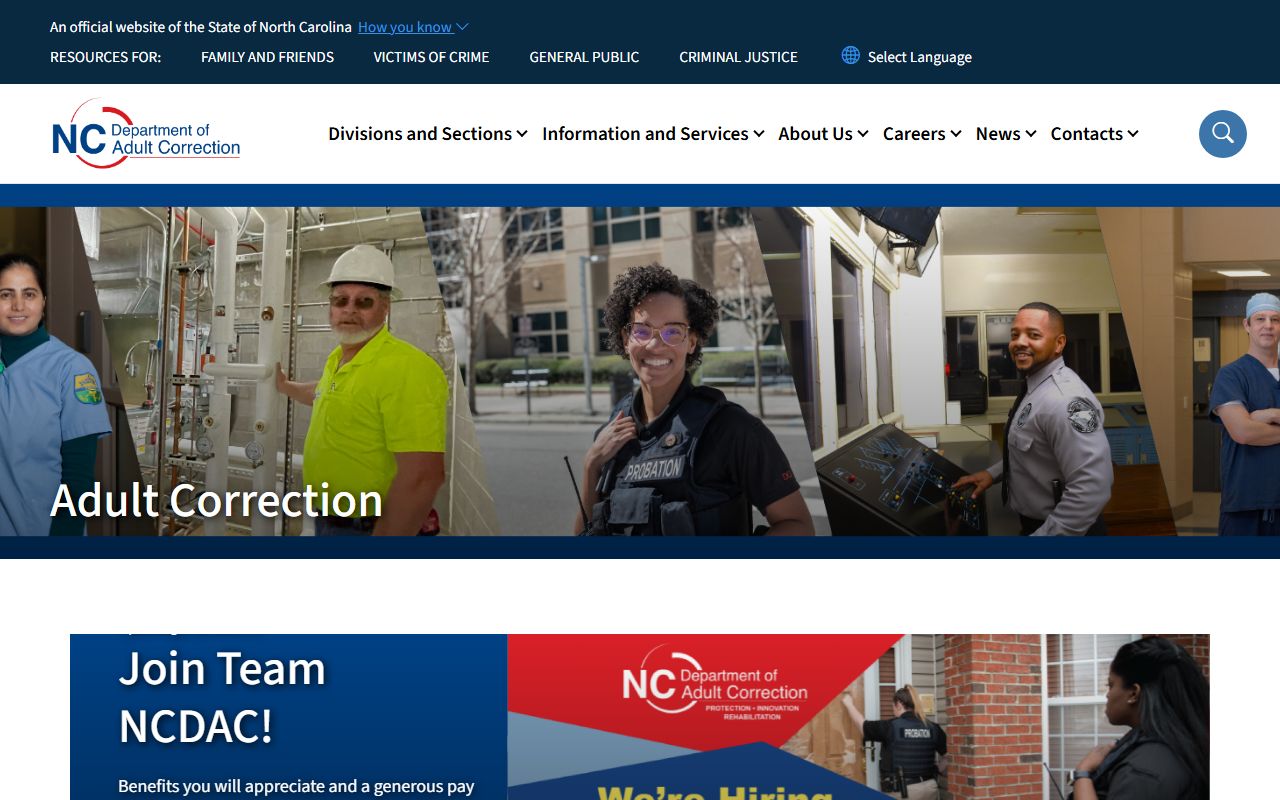
That statewide entry point matters because NCDAC is the prison and supervision authority, while local jail bookings stay with the county that made or received the arrest.
North Carolina Inmate Population Statistics
The best current prison number in the research comes from NCDAC's FY 2023-2024 report. It counted 31,932 people in state prison on June 30, 2024. The same research says 31,472 were felony-conviction custody and 460 were misdemeanor-conviction custody. NCDAC's current prison-facility web list includes 47 named adult prison facilities, while the FY report counted 56 adult correction system facilities when prisons, CRV centers, contractual residential programming, and related categories are grouped together.
| Measure | Figure | Source |
|---|---|---|
| NCDAC state-prison population | 31,932 | NCDAC FY 2023-2024 Annual Statistical Report, June 30, 2024 |
| Felony-conviction custody | 31,472 | NCDAC FY 2023-2024 Annual Statistical Report |
| Misdemeanor-conviction custody | 460 | NCDAC FY 2023-2024 Annual Statistical Report |
| County coverage | 100 county folders | Statewide North Carolina county-folder roll-up |
North Carolina Inmate Population Trends
The official prison trend in the research is upward from 2022 through 2024. NCDAC reported 30,504 people in state prison on June 30, 2022, then 31,197 on June 30, 2023, and 31,932 on June 30, 2024. The research connects the change to a rebound after the COVID-era court slowdown, when convictions fell and prison population dropped. Later annual reports show the state prison count moving back up as court operations and admissions normalized.
| Date | State Prison Population | Research Source |
|---|---|---|
| June 30, 2022 | 30,504 | NCDAC FY 2021-2022 report |
| June 30, 2023 | 31,197 | NCDAC FY 2022-2023 report |
| June 30, 2024 | 31,932 | NCDAC FY 2023-2024 report |
The NCDAC criminal offender searches page explains the state locator's prison, probation, and parole scope.
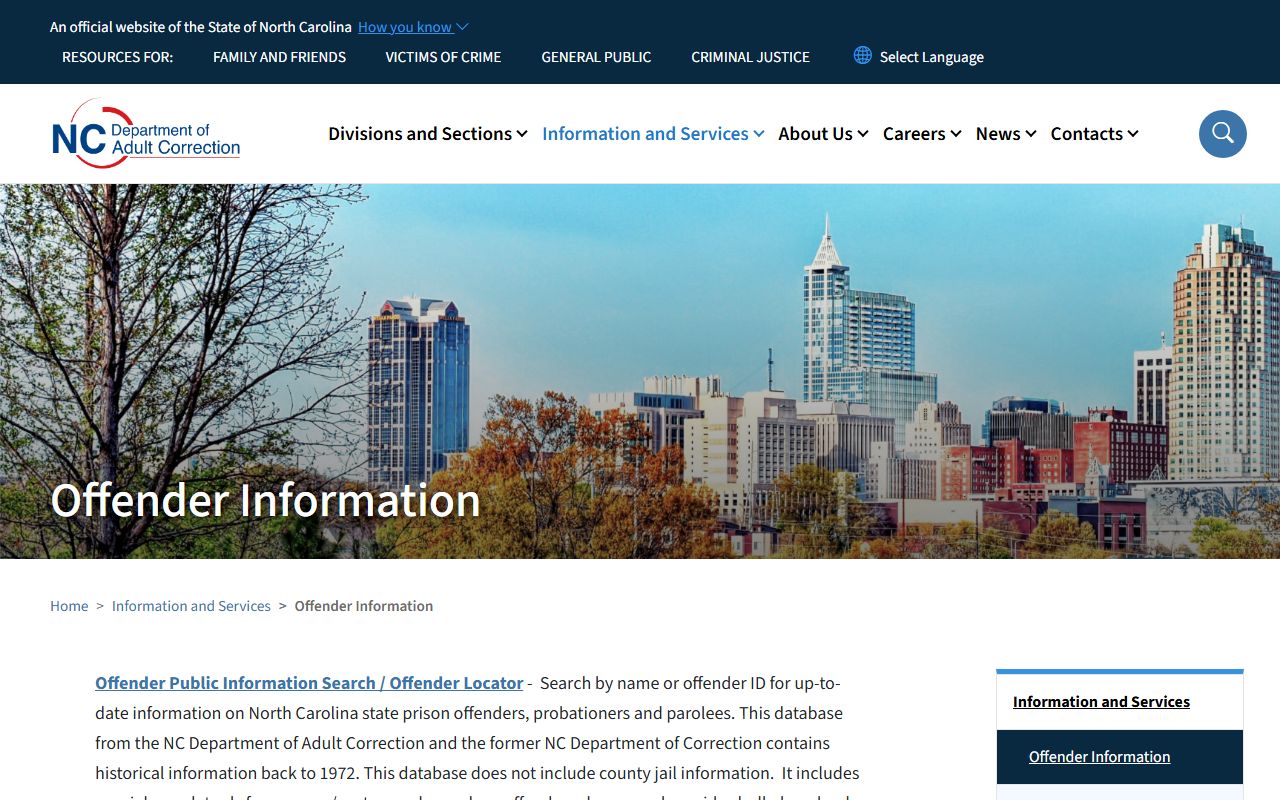
The page also warns users away from a common mistake: county jail inmates are not included in the NCDAC database.
Who Is Counted in North Carolina
North Carolina's inmate population includes several custody groups that should not be mixed. The state-prison number is made up of people in NCDAC custody after a prison sentence. County jails hold people before trial, after arrest, on probation or parole holds, under local sentences, or while waiting for movement to another agency. BOP facilities in North Carolina, especially the Butner federal complex and RRM Raleigh, are federal custody. ICE detention is searched through ICE ODLS and facility or field-office contact when the online tool fails.
- County jail
- Local custody for recent arrests, bond, first appearance, short local sentences, and some holds.
- NCDAC
- The North Carolina Department of Adult Correction, which runs the state prison and supervision system.
- Detainer
- A hold or notice from another agency that may affect release from the current jail or prison.
- Post-release supervision
- Community supervision after required prison time under North Carolina's structured-sentencing framework.
North Carolina Inmate Records Law
North Carolina public records law begins with Chapter 132. G.S. 132-1 defines public records broadly as materials made or received in connection with public business. Jail and prison records still have limits. G.S. 132-1.4 treats criminal investigation and intelligence records differently from ordinary public records. That is why arrest, charge, custody, bond, and release facts may be public while investigative files, witness statements, medical information, juvenile records, security records, and sealed court records may be withheld or redacted.
Records rule: Ask the custodian that holds the record. NCDAC does not have local, county, or city jail records, and county sheriffs do not control NCDAC prison files.
The NCDAC public-records page states that public prison information may include basic conviction, sentence, admission, time-served, and release data, while many internal prison and supervision records are confidential.
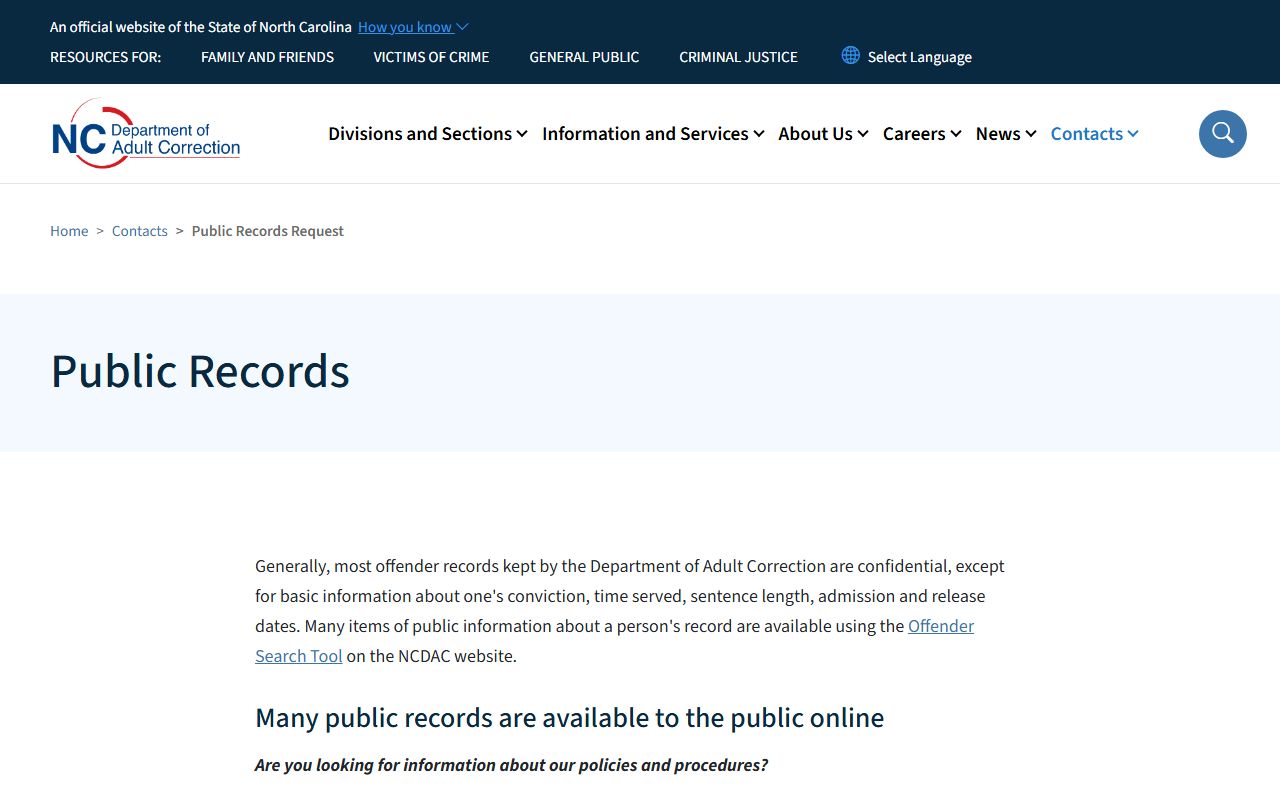
That source is useful for state prison records, but it also directs local jail, police, court, vital, and county records to the correct non-NCDAC custodian.
North Carolina State Prison System
The North Carolina Department of Adult Correction became a standalone cabinet agency on January 1, 2023. The research says it includes Prisons, Community Supervision, Alcohol and Chemical Dependency Programs, Correction Enterprises, and related support functions. Its prison classification page describes receiving centers, risk assessment, custody assignment, and control statuses. New admissions move from county jails into prison receiving centers, then classification staff consider medical needs, mental health, crime, history, education, job skills, work history, criminal record, and prior prison terms before assignment.
NCDAC custody levels include close, medium, minimum I, minimum II, and minimum III. Close custody is the highest listed public-safety risk, and minimum III is the lowest of those levels. Control statuses such as RHAP, RHDP, RHCP, and HCON add restrictions for administrative, disciplinary, control, or high-security needs. That is why a North Carolina inmate population record should be read as a custody and status snapshot, not a fixed security label for the whole prison.
The NCDAC prison-facility list is the statewide source for named adult prison facilities and regional office context.
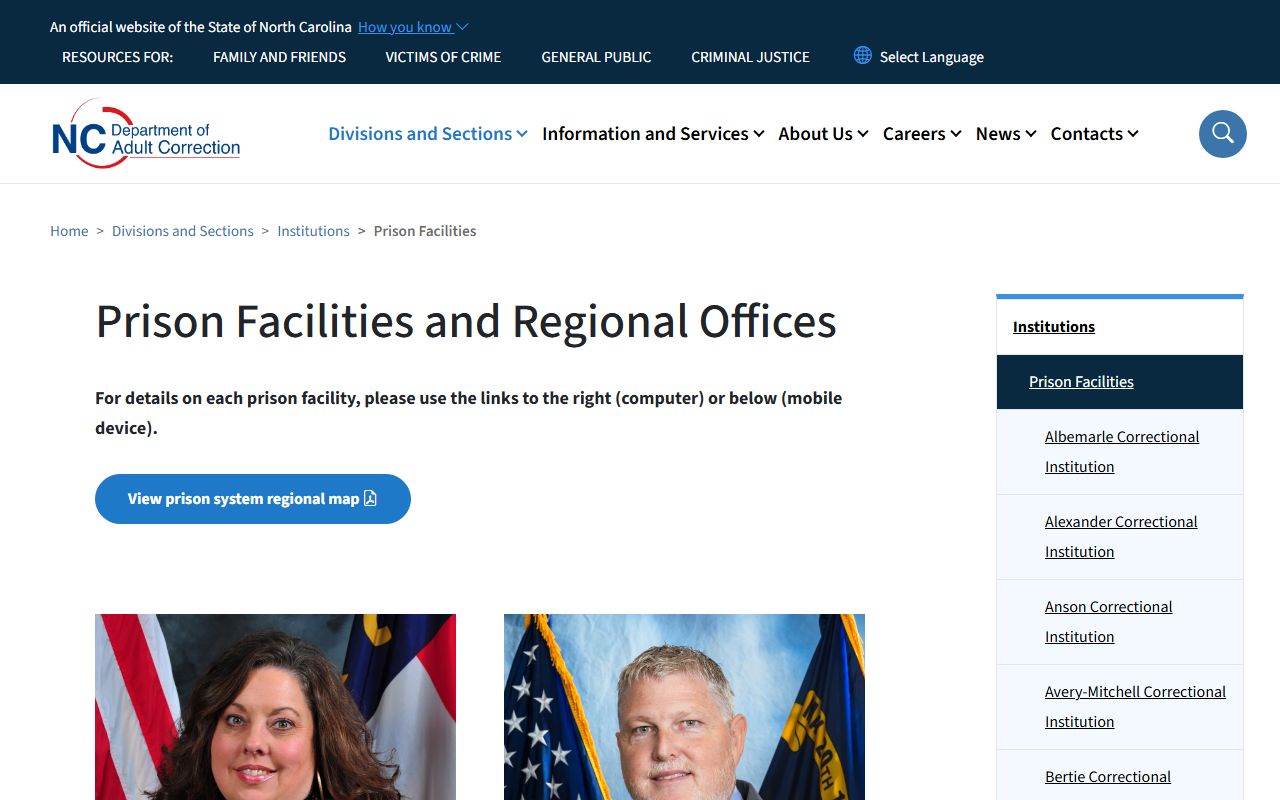
The statewide Facility Directory also includes county jails, regional jails, juvenile infrastructure notes, and federal facilities so users do not confuse those systems with NCDAC prisons.
Search the North Carolina Inmate Population
A sound North Carolina inmate population search starts with the last known custody event. A person arrested yesterday in Mecklenburg, Wake, Guilford, Buncombe, or a smaller county should be searched through the booking county first. A person serving a prison sentence or under state community supervision should be searched through NCDAC. A person in federal court or a Butner federal institution should be searched through BOP. Immigration custody belongs in ICE ODLS, while custody-change alerts use NC SAVAN through VINELink.
- For a recent arrest, identify the county that booked or holds the person.
- Open that county through the North Carolina County Directory and use its jail roster path.
- For state-prison custody, search the NCDAC Offender Public Information Search by offender ID or name.
- For federal custody, search BOP by register number or name.
- For immigration detention, search ICE ODLS by A-number or biographical details, then contact ICE or the facility if needed.
- For release notifications, use VINELink or NC SAVAN rather than relying on one static record.
The NCDAC Offender Public Information Search is the state-prison and supervision locator, not a county jail roster.
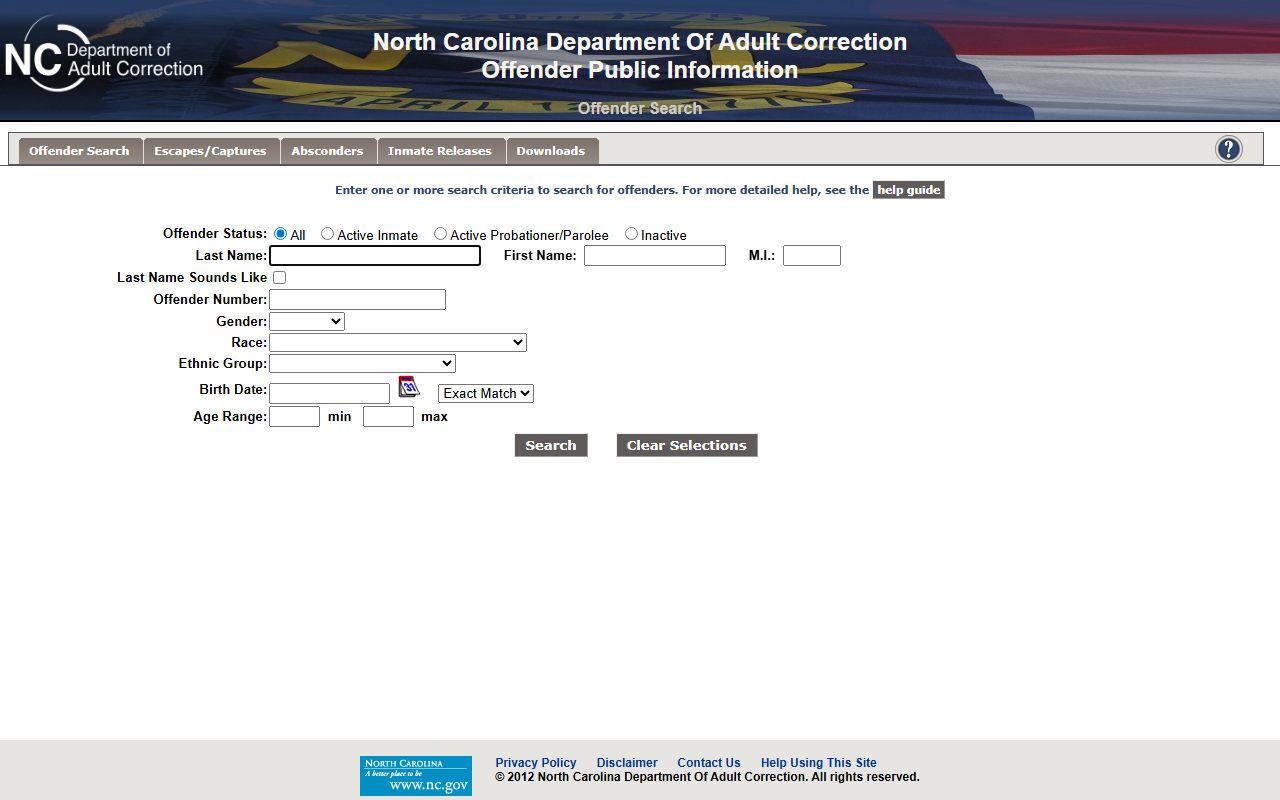
Use offender ID when known because spelling, aliases, committed names, and result limits can make name searches less reliable.
County Jail vs State Prison
North Carolina jail and prison records answer different questions. A county jail roster says who is currently held or recently booked by that county or regional jail. NCDAC says who is in state prison, who has prison history back to 1972, and who is on probation, parole, or post-release supervision. A county no-result does not prove the person is not in NCDAC, BOP, ICE, another county, or court-ordered custody. An NCDAC no-result does not prove the person is not in a county jail.
| Question | Start Here | Why |
|---|---|---|
| Arrested recently or waiting for bond | County jail roster | The sheriff or regional jail books the person first. |
| Serving a North Carolina prison sentence | NCDAC locator | NCDAC runs state prison custody and supervision records. |
| Federal sentence or Butner facility | BOP locator | BOP facilities are federal, not NCDAC prisons. |
| Immigration detention | ICE ODLS | ICE custody is separate from county jail and state prison records. |
Federal, ICE, VINE, and Court Search
The Federal Bureau of Prisons locator searches federal inmates from 1982 to the present. It supports number searches and name searches and returns fields such as name, register number, age, race, sex, release date, and location. BOP warns that First Step Act sentence review and recalculation can affect release dates.
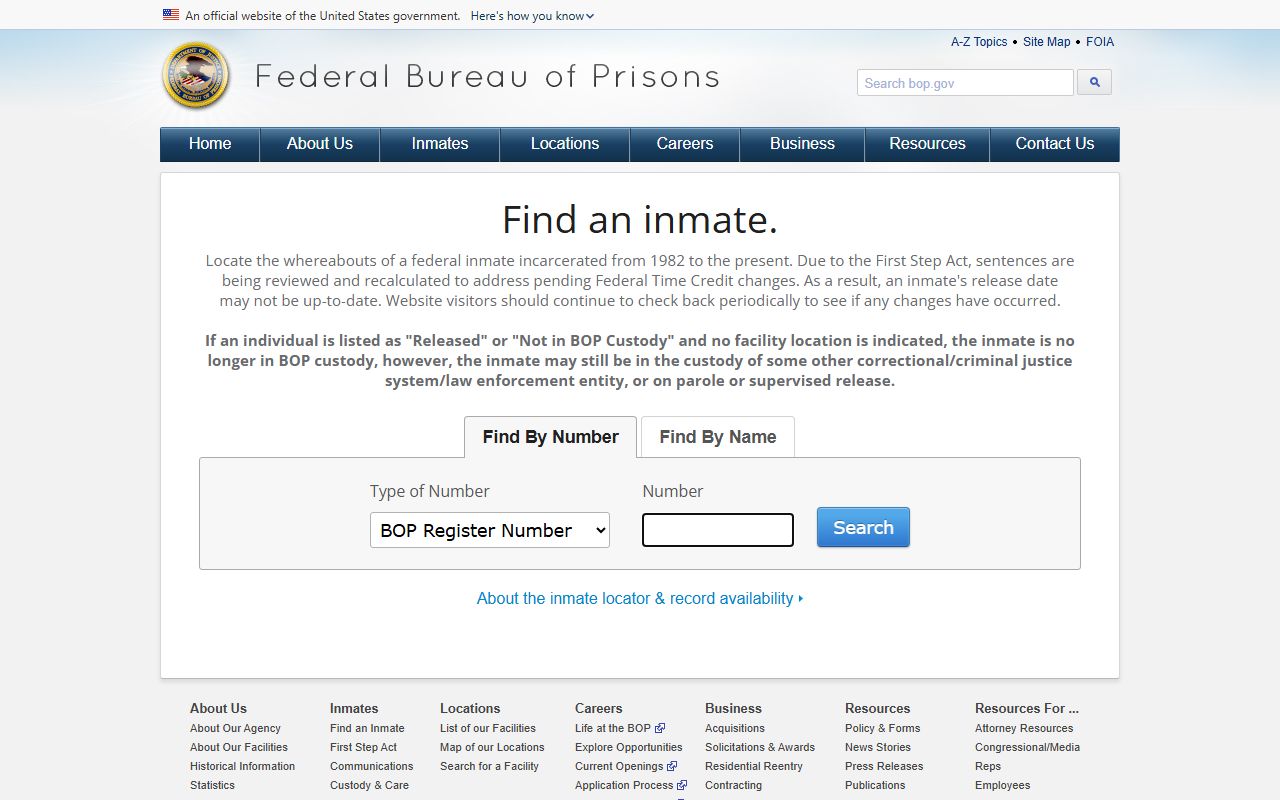
BOP matters in North Carolina because the Butner federal institutions and RRM Raleigh are federal custody paths, even though they are physically inside the state.
The North Carolina VINELink portal, also known as NC SAVAN, is a free and confidential notification service for county jail inmates, state prisoners, probationers, parolees, and registered sex offenders.
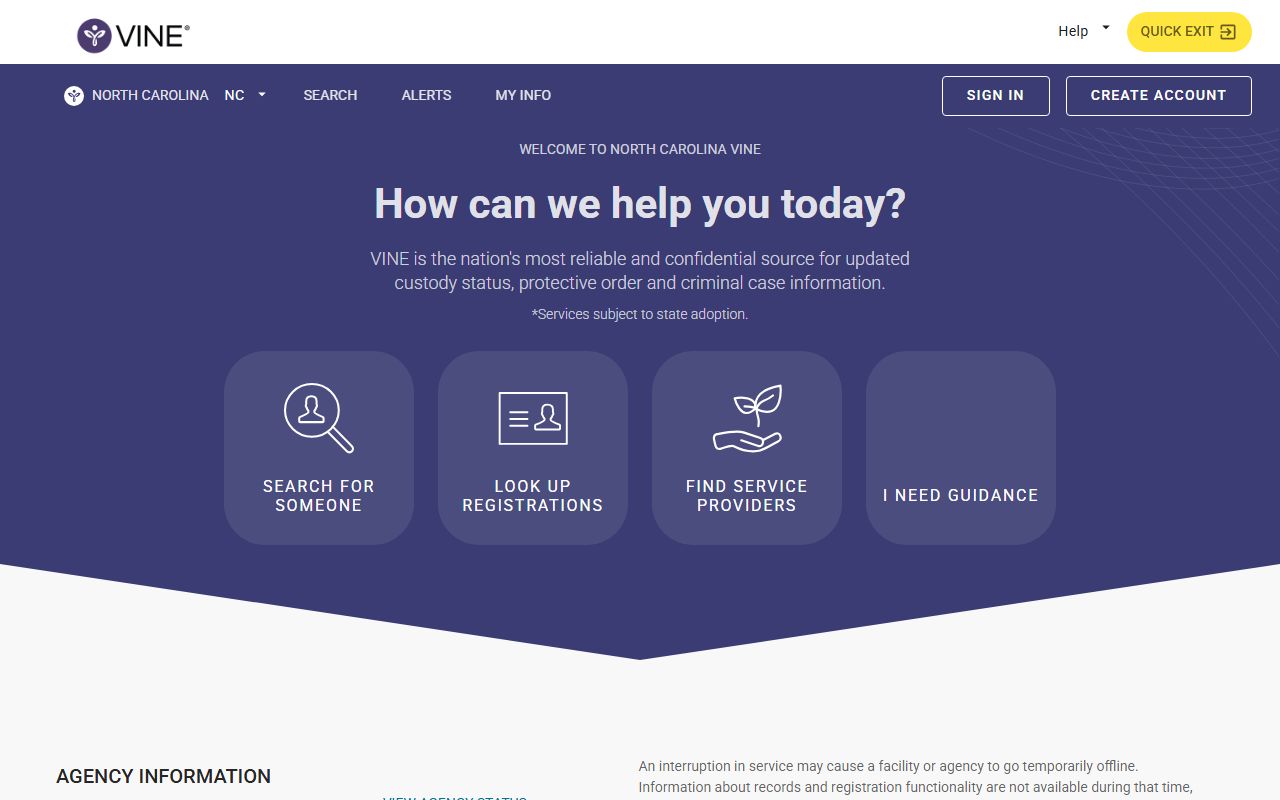
VINELink is useful when custody may change, but it should be paired with the official roster or locator when exact case details are needed.
The North Carolina Judicial Branch services page routes users to court records, hearing dates, payments, and public-record request guidance.
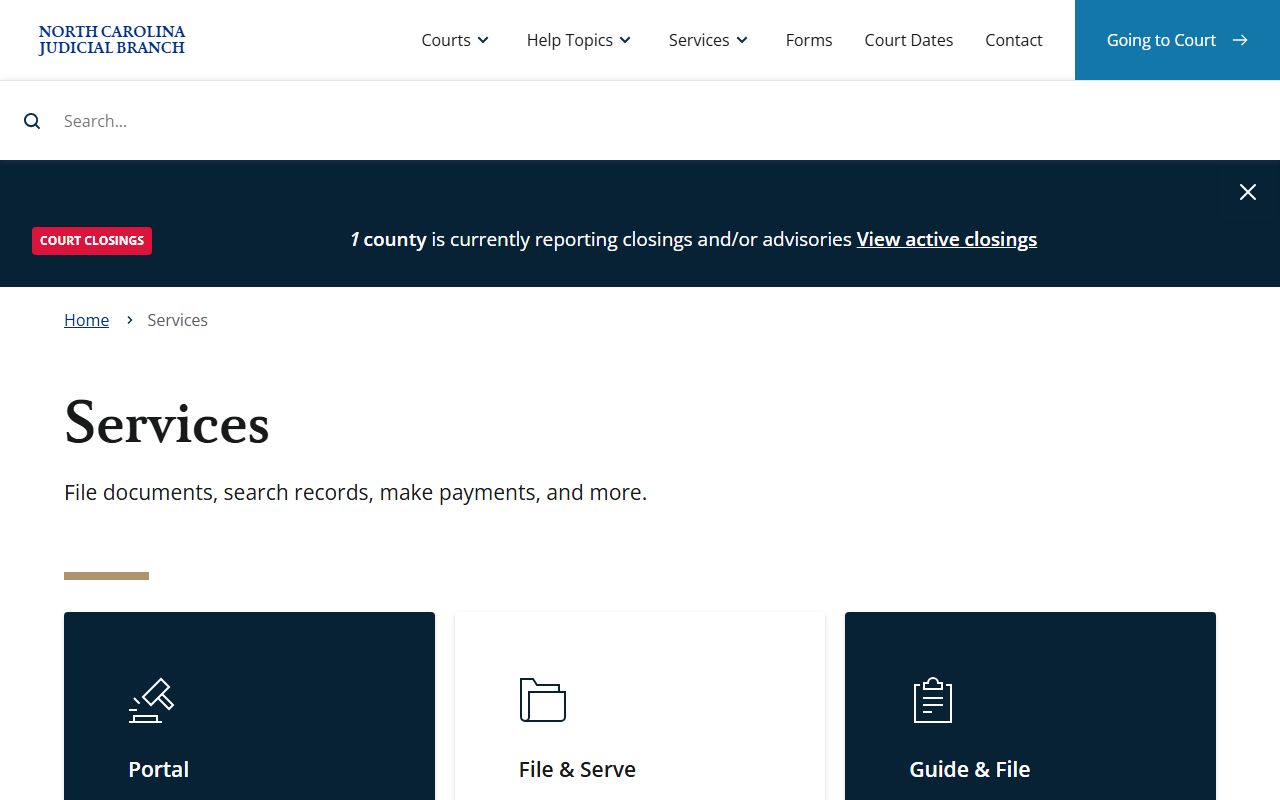
Court records show charges, hearings, dispositions, and case events after arrest, while jail rosters show custody and booking status.
North Carolina Detention Facilities
North Carolina's facility landscape includes county jails, district and regional jails, NCDAC prisons, state-linked treatment or violation centers, juvenile facilities noted in county research, and federal institutions. Several facilities serve more than one county. Albemarle District Jail appears across Camden, Gates, Pasquotank, and Perquimans research. Bertie-Martin Regional Jail serves a regional path. Washington County Jail is also a practical local custody route for Tyrrell County, and McDowell County Detention Center appears in Mitchell County's adult housing path.
The full North Carolina Facility Directory collapses duplicate regional rows and links covered facilities to their forward-pointing county subdomain page using the `APEX_DOMAIN_TBD` placeholder. Juvenile rows are identified as juvenile systems and should not be treated as adult jail roster sources.
North Carolina Inmate Population FAQ
How big is the North Carolina inmate population?
NCDAC reported 31,932 people in state prison on June 30, 2024. That is the official state-prison side of the North Carolina inmate population, not a full count of every person in a county jail, federal prison, ICE detention, or court hold.
Where should a recent arrest be searched?
Start with the county that booked or holds the person. County jails and regional jails handle recent arrests, bond status, and first local custody records. If the person later moves to state prison, the NCDAC locator becomes the main search tool.
Does NCDAC include county jail inmates?
No. NCDAC's research source says it does not have access to local, county, or city jail records. Its locator covers state prison offenders, probationers, parolees, and historical Department of Correction data back to 1972.
Which system covers court charges?
The North Carolina Judicial Branch and eCourts Portal cover case records, hearing dates, payments, and court-record requests. Jail booking charges can differ from charges filed or amended in court.