
North Carolina Court Records After Arrest
After a jail arrest in North Carolina, two public-record tracks can exist at the same time. The jail track is about custody: booking, facility, bond, holds, and release status. The court track is about the case: filed charges, hearing dates, court events, dispositions, and orders. They often start with the same incident, but they are maintained by different custodians and can update on different schedules.
That difference explains why a jail roster may show an arrest before the court portal shows a case, or why a court charge may be amended after the jail profile still shows the booking charge. For current custody and booking details, use North Carolina inmate records. For booking photos, use North Carolina jail mugshots. For charges filed after arrest, use the North Carolina Judicial Branch and the clerk route.
The North Carolina Judicial Branch services page links court records, hearing dates, payments, and public-record services.
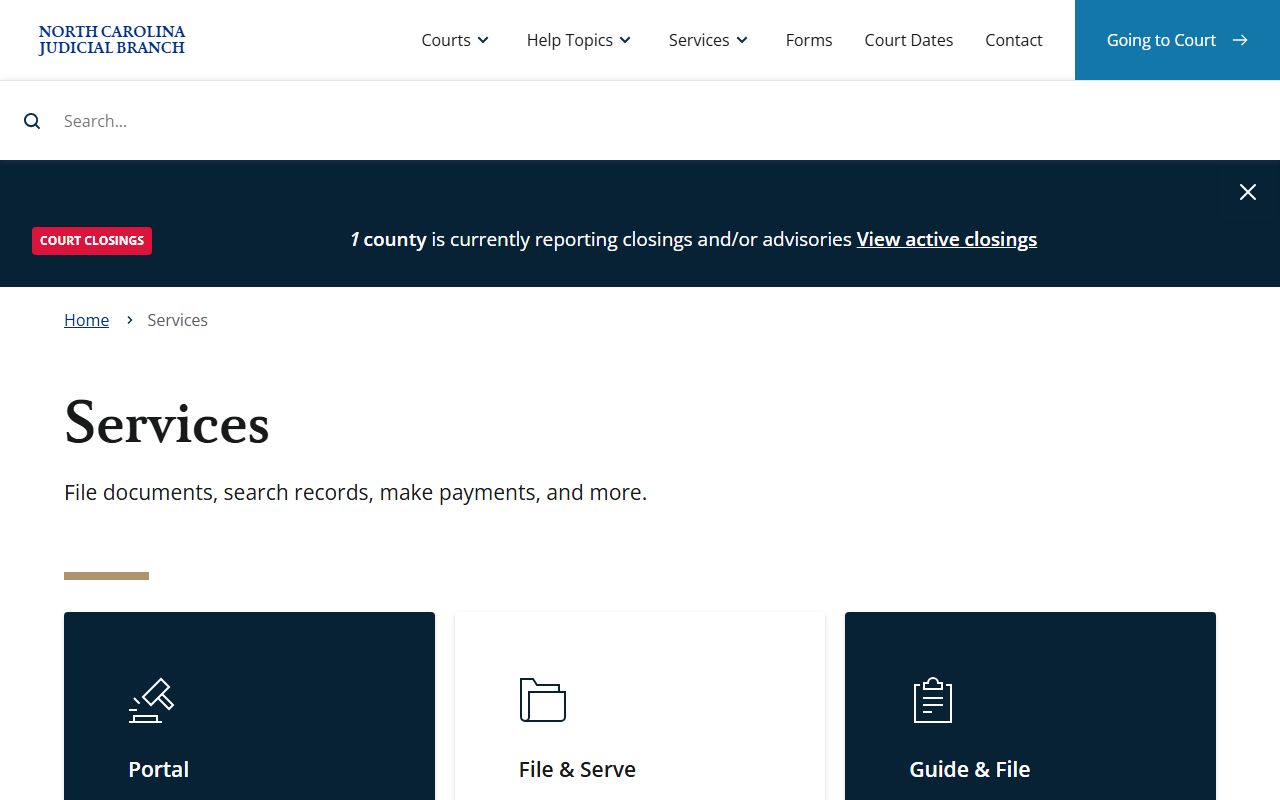
That statewide services page is the broad starting point before moving into the eCourts Portal or a county clerk's office.
North Carolina Trial Courts
North Carolina criminal cases are handled in the statewide Judicial Branch through trial courts organized by county and court type. A person may be booked in a county jail, appear before a judicial official, and then have criminal charges tracked through the county where the case is filed. County clerks remain important for copies, older files, background-check guidance, and records that are not fully resolved by the public portal.
The research file notes that, as of October 13, 2025, eCourts conversion had reached all 100 North Carolina counties. That means the statewide apex can point every county to the Portal for online case information while still explaining that clerk access matters for certified copies, older county-specific files, and formal background-check processes. The portal is a court case search, not a jail roster and not a consumer background-check product.
Find Court Records After Arrest
Use the court system when the question is about charges, case status, hearing dates, disposition, or copies. Use the jail system when the question is current custody, bond, booking photo, or release from jail. If the arrest is very recent, the jail roster may appear first because prosecutors and clerks need time to open or update the case record.
- Open the North Carolina eCourts Portal.
- Search by defendant name or case number when known.
- Open the criminal case and compare each charge, status, hearing, and disposition.
- Contact the county Clerk of Superior Court when a copy, older record, certified record, or background-check route is needed.
- Check the county jail roster separately if custody status or booking details are still the main concern.
The North Carolina eCourts Portal is the public search interface for online case information.
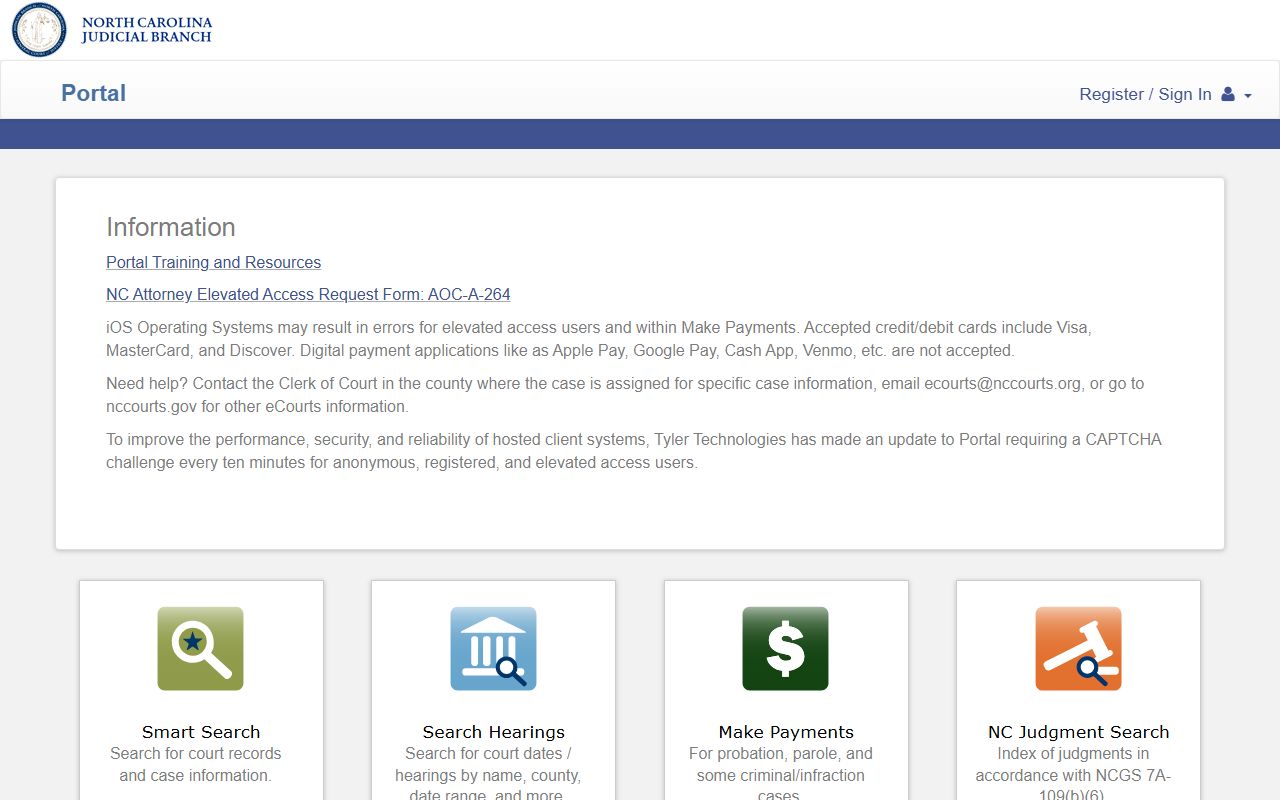
Search results should be read as court case information, then compared with jail records when custody or booking status is part of the question.
Charges Filed After Arrest
A jail arrest is not the same as a final court charge. Booking can begin with an arresting agency's charge label or hold reason. The court record develops when charges are filed, screened, amended, indicted, dismissed, or resolved. North Carolina users should expect the case record to be the better source for what the prosecutor is pursuing, while the jail roster remains the better source for where the person is held.
| Record Type | Who Uses It | What It Does |
|---|---|---|
| Magistrate or charging paperwork | Law enforcement and judicial officials | Starts the charge path after arrest and first appearance. |
| Information or prosecutor filing | District attorney | States charges the prosecutor elects to pursue in court. |
| Indictment | Grand jury and prosecutor | Formal felony charging document for qualifying cases. |
Terminology can vary by case type and stage. The practical point is the same: compare the jail charge to the court charge before treating a booking label as the final accusation.
Charge Status in Court Records
Charge status is one of the most important fields in North Carolina court records after arrest. A charge can be pending, amended, reduced, dismissed, disposed by plea, resolved at trial, or moved into another case path. A case can also show hearings, continuances, warrants, failures to appear, bond changes, or post-judgment entries. These entries can affect custody, but the court record and jail record may not refresh at the same moment.
| Status | What It Means | What To Check |
|---|---|---|
| Pending | The charge remains open and has not reached final disposition. | Next court date and bond status. |
| Amended or reduced | The charge label or level changed after filing. | Original booking charge and current court charge. |
| Dismissed | The charge was dropped or ended without conviction. | Whether other charges in the case remain open. |
| Convicted | A plea or verdict produced a conviction. | Sentence, custody credit, probation, or prison transfer. |
| Failure to appear | The court may have entered a missed-court event. | Warrant status and clerk guidance. |
Bond After Jail Arrest
Bond links the jail and court systems. A bond entry on a roster tells whether release conditions exist, but the court record may show hearings, modified conditions, failures to appear, or orders that affect release. A detainer, hold, or no-bond order can mean a person remains in custody even when one charge appears resolved. A person can also leave county jail and still face court dates, probation supervision, NCDAC custody, federal custody, or immigration detention.
| Term | Plain Meaning |
|---|---|
| Cash bond | Money must be posted under the court's release condition. |
| Surety bond | A bondsman or surety posts the bond under court rules. |
| Written promise or unsecured bond | Release may occur without upfront cash, subject to court conditions. |
| No-bond hold | Release is not available through a standard bond entry at that stage. |
| Detainer or hold | Another agency or case may keep the person in custody. |
Charges vs Convictions
Being arrested or charged is not the same as being convicted. Court records after a jail arrest can contain accusations, pending charges, dismissed charges, and convictions in the same case history. That is why a case lookup should separate the stage of the case from the final outcome. The jail roster may show why the person was booked. The court record shows whether the charge was filed, changed, dismissed, or ended in a conviction.
| Point | Charge | Conviction |
|---|---|---|
| Stage | Accusation or filed count after arrest. | Final result after plea, verdict, or judgment. |
| Custody impact | May affect bond and pretrial detention. | May trigger probation, jail, prison, fines, or supervision. |
| Record reading | Check current status before drawing a conclusion. | Check sentence and disposition details. |
Sealed and Expunged Records
Some North Carolina court records can become restricted, nonpublic, or expunged through court process. Expunction means eligible records are removed from ordinary public access under court order. Sealed or otherwise restricted records may remain available only to limited agencies or for limited purposes. Eligibility depends on the charge, disposition, prior history, waiting periods, and the specific law that applies. The research file does not support a one-size-fits-all promise, so the accurate path is to check the court case, then use the clerk or legal process for the specific record.
| Question | Restricted or Sealed | Expunged |
|---|---|---|
| Public visibility | Hidden or limited by rule or court order. | Removed from ordinary public access after a granted petition. |
| Custodian | Court or agency keeps controlled access. | Court order directs qualifying record handling. |
| Best source | Clerk of Superior Court or court order. | Clerk of Superior Court and the final expunction order. |
The Judicial Branch services page gives statewide entry points for court records, hearing dates, payments, and related services.
Use court guidance rather than a jail roster when the issue is sealing, expunction, certified copies, or final disposition.
Public Records and Copies
North Carolina Judicial Branch guidance routes record requests by record type. Portal searches can provide online case information. Clerks handle county-specific court files, older records, copies, and background-check guidance. Judicial Branch public-record request channels can help with administrative records, but criminal and civil case records generally follow the Portal and clerk path. Police reports, jail records, vital records, deeds, and prison records have separate custodians.
The NCDAC online public-record resources page points users toward offender information, court-record routing, SBI background checks, and related public resources.
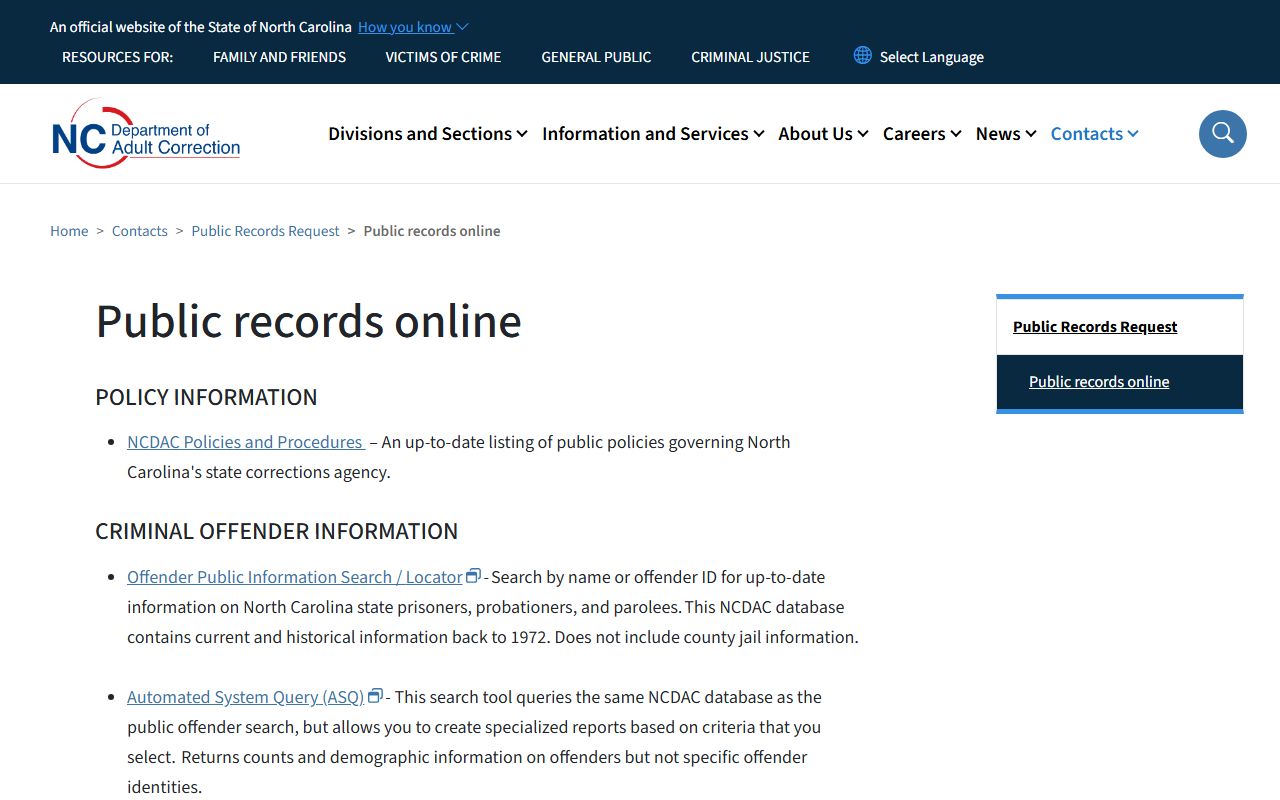
That routing point matters because NCDAC, courts, clerks, county sheriffs, police departments, registers of deeds, and vital-record offices do not hold the same records.
Important: A public case lookup is not an FCRA consumer report and should not be used for employment, tenant, credit, or insurance screening.
Restricted Arrest Court Records
Not every record tied to an arrest is public. Juvenile records, sealed matters, expunged records, medical information, victim details, security-sensitive data, and active investigative material can be restricted. G.S. 132-1.4 is especially important outside the court file because it limits criminal-investigation and criminal-intelligence records. A clerk may be able to provide the public case record while a sheriff or police agency withholds investigative files from the same incident.
The cleanest way to read a North Carolina arrest record is to keep each source in its lane: jail roster for custody, court portal for charges and disposition, clerk for copies, NCDAC for state prison or supervision, BOP for federal custody, ICE for immigration detention, and VINELink for alerts.